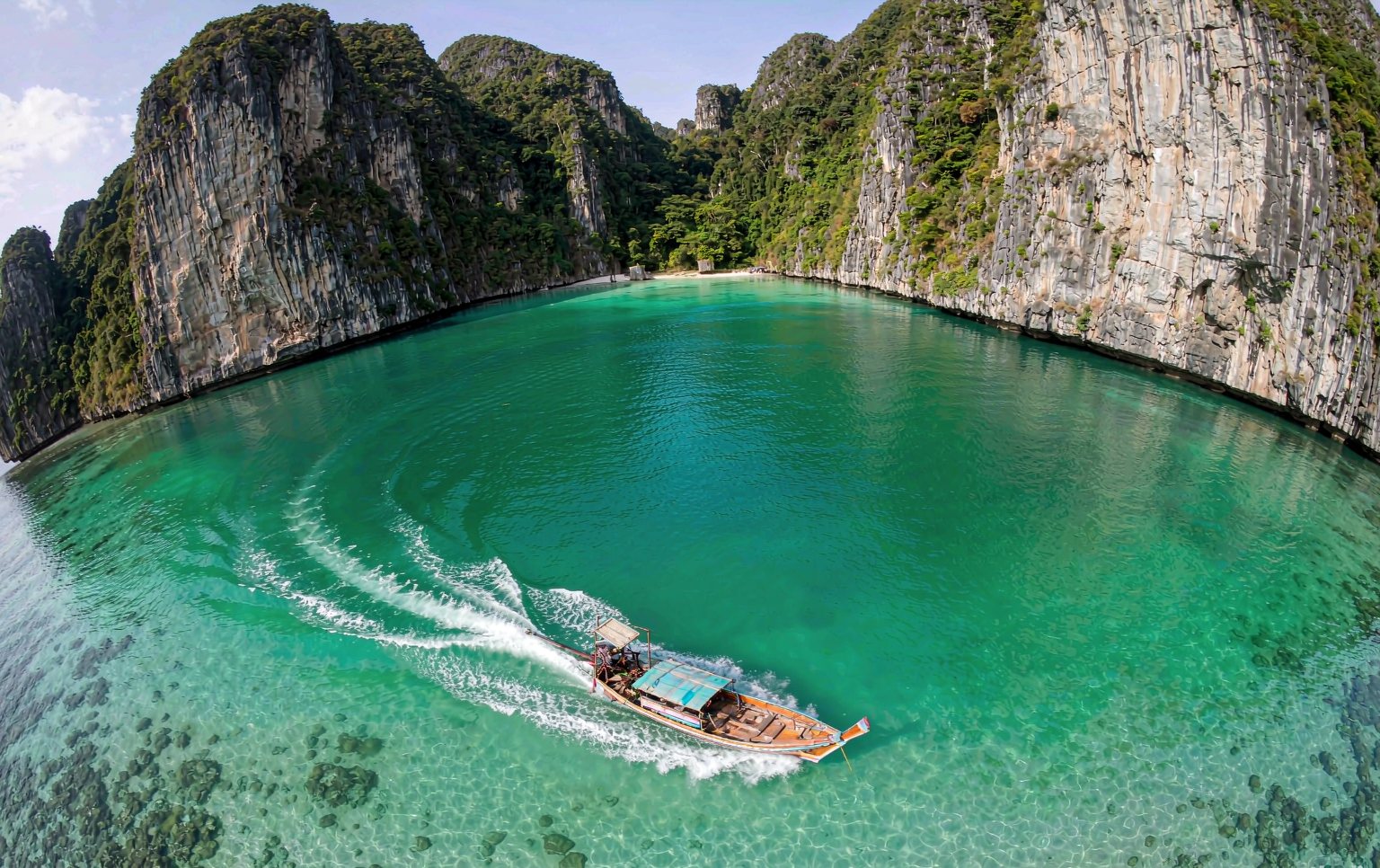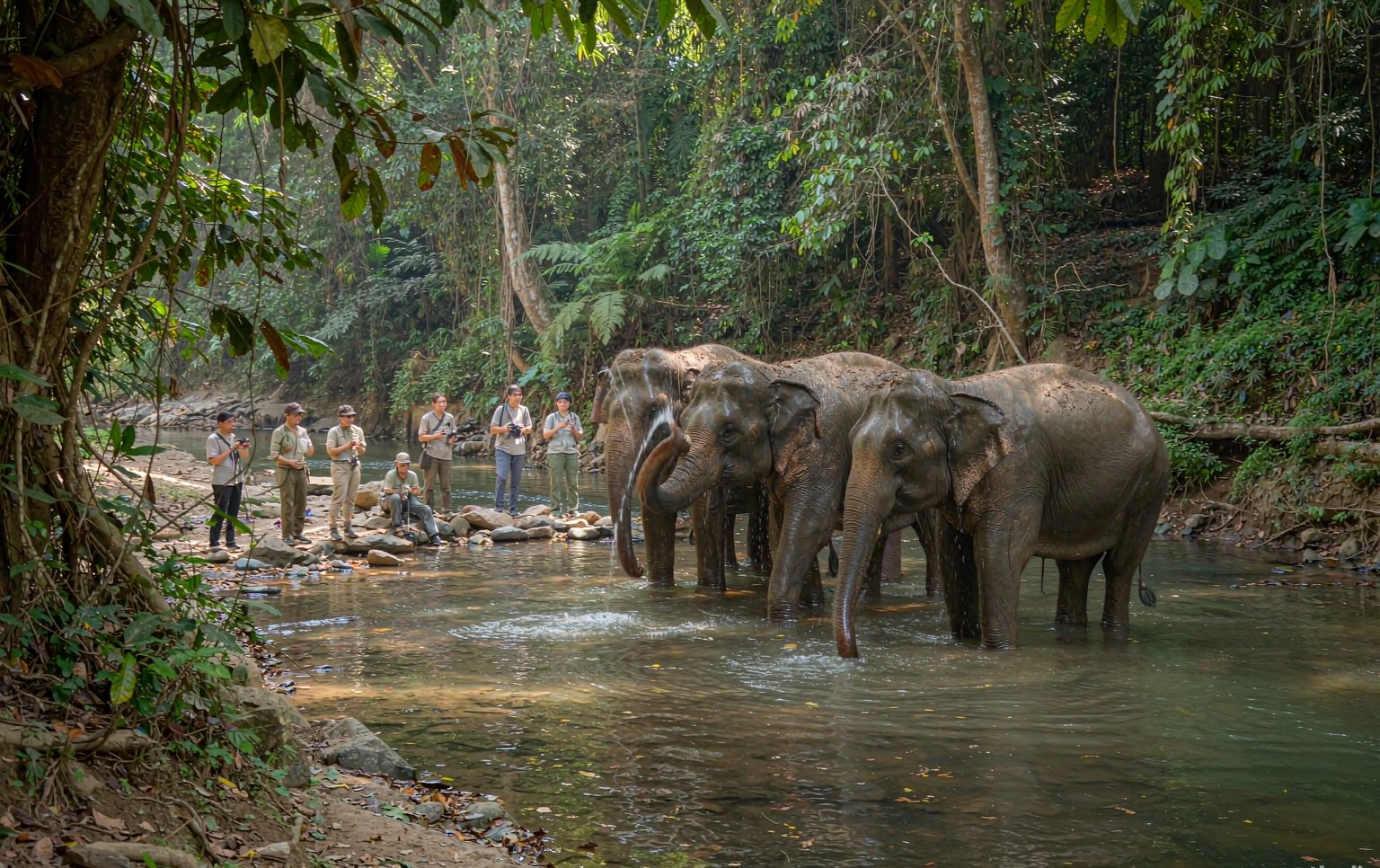
Mae Wang valley, Chiang Mai
Chiang Mai Elephant Sanctuary
No riding, no hooks · capped groups · lunch included
from$110 / pp
View Thailand has roughly 3,500 captive elephants and perhaps sixty places that treat them properly. The other several hundred call themselves sanctuaries. Here is how to tell the difference in five minutes, before you pay a deposit.
If yes, stop. An elephant's spine is not built to carry a howdah and a person for hours; the scarring on working elephants is visible on their backs. Any operator still selling rides is not a sanctuary regardless of what the sign says.
Look at the mahouts' hands and belts. A bullhook — a metal hook on a short handle — is the standard tool of the logging and riding industry. Good sanctuaries use voice, food and patience. Some carry a hook “for emergencies”; ask, and watch whether it is ever used.
This is the subtlest one. Elephants do enjoy water, and mud. But a scheduled “bathe with the elephants at 13:00, everyone in the river with a bucket” is a performance built for photographs, and it stresses the animals when forty people crowd them. Observation from the bank is fine; being in the water with them for an hour is not.
A genuine sanctuary can tell you each animal's name, age and history — usually logging, trekking or street begging. If the answer is “born here”, you are at a breeding operation, which is a business, not a rescue.
Roughly one group of six to eight visitors per animal per session is the working maximum. Coaches of forty rotating through a small enclosure is not.
The honest answer is: eat, walk, dust-bathe, swim, and be left alone. A day at a good sanctuary involves a lot of watching elephants do very little, and that is the point.
| What you pay | Half day | Full day |
|---|---|---|
| Chiang Mai (Mae Wang) | $95 | $145 |
| Chiang Mai (premium, small group) | $130 | $185 |
| Phuket sanctuary | $110 | $165 |
| Khao Sok | — | $135 |
Feeding one elephant costs ฿40,000–60,000 a month. A $95 half day mostly covers food, vet care and mahout wages — which is why the genuinely ethical places are never the cheapest option on the street.
08:00 pickup, a briefing on the drive about each elephant's history.
09:00 prepare food — cutting banana trunks, mixing rice balls. This is work, and it is the part people remember.
10:00 walk out to where the elephants are grazing. You follow at a distance; they are not brought to you.
12:00 lunch, then a long quiet period while the elephants rest.
14:30 observe the river. Some choose to enter the water; most do not.
16:00 back.
No tricks, no painting, no football, no photographs of a trunk around your neck. If an itinerary offers any of those, it is a show.
Chiang Mai has the highest concentration and the deepest pool of genuinely ethical operators — our Mae Wang partner has been with us nine years. Phuket has one good sanctuary and several bad ones. Khao Sok is worth it if you are already going south.
Yes for most people. The full day adds the afternoon river observation and a longer walk, which is better for photographers and worse for children under six.
From about five, yes, with a parent. The walking is gentle and there are no rides. Tell us ages so the sanctuary can allocate a slower group.
They run. Elephants do not mind rain and the sanctuaries are used to it. Bring a poncho; the mud is part of the day.
Some sanctuaries offer an observation-only ticket at about 60% of the price. Ask us and we will check availability for your date.
Tell us the city and date — we will name the sanctuary before you commit.